The crafting of the article
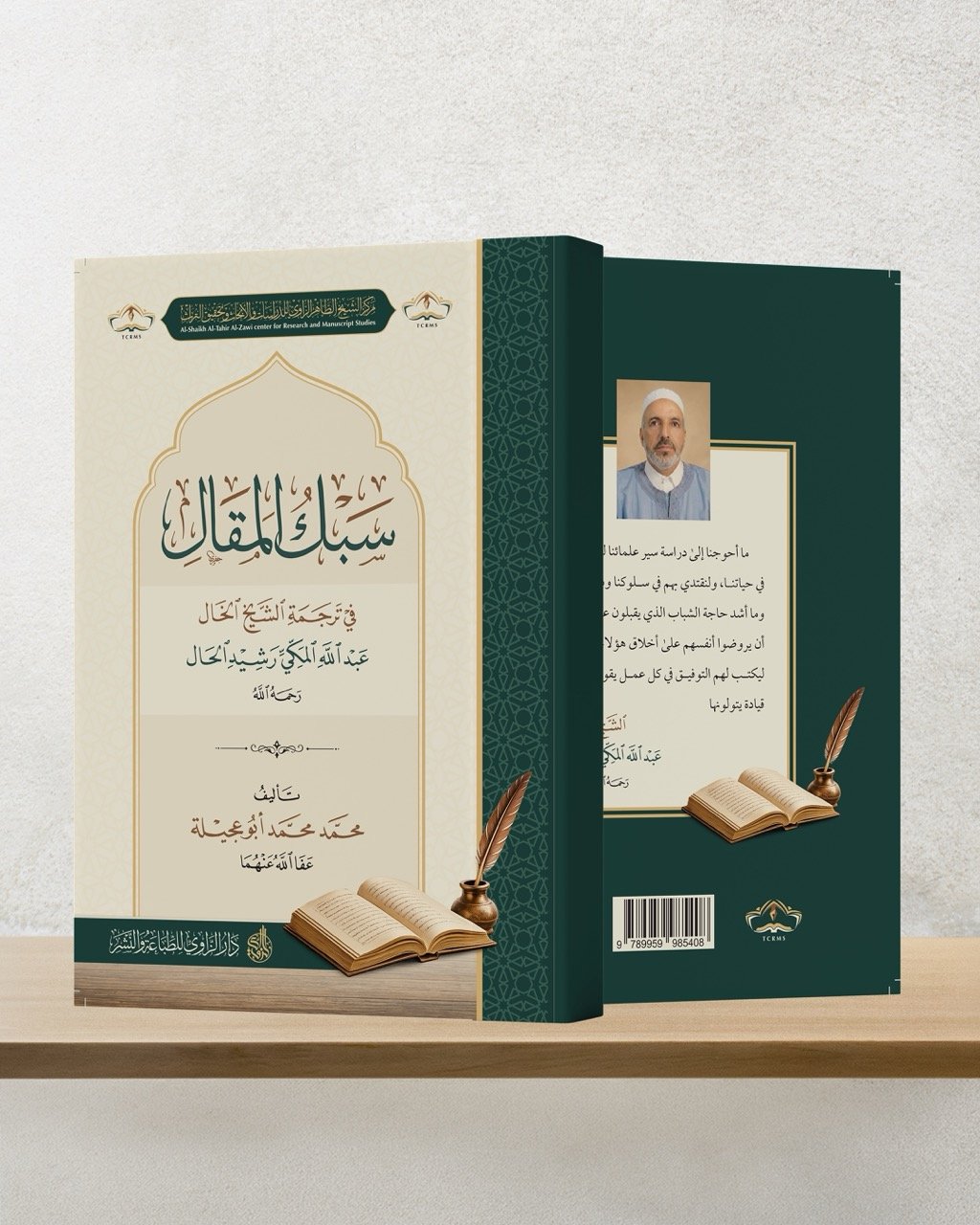
In preparation for the scholarly symposium titled “Sheikh Abdullah Al-Makki Rashid (1944–2009): Scholarship, Reform, and Legacy,” the Sheikh Al-Tahir Al-Zawi Center for Studies, Research, and Heritage Preservation is pleased to announce to the cultural and intellectual community the publication of the book:
Sabk al-Maqal fi Tarjamat al-Sheikh al-Khal Abdullah Al-Makki Rashid (The Articulate Account: A Biography of Sheikh Abdullah Al-Makki Rashid)
Authored by Dr. Muhammad Muhammad Abu Ajila
This book serves as a rich historical document, a tribute of loyalty, and a truthful testimony penned by Dr. Muhammad Muhammad Abu Ajila regarding his maternal uncle—the esteemed Sheikh, jurist, and educator, Abdullah Al-Makki Rashid. The Sheikh was, in essence, a walking institution of scholarship and education. He combined vast knowledge, a commanding personality, gracious discourse, and noble character; whenever prayer time arrived, senior figures would step aside for him to lead the congregation; when he ascended the pulpit, the audience would yield the floor to him; and when scholarly gatherings were held, all would defer to his merit and learning.
Significantly, the book traces the Sheikh’s early upbringing within traditional centers of learning, chronicling his memorization of texts and his formative years among peers. It follows his journey to becoming a renowned scholar and a sought-after destination for knowledge—a status reflected in the lives of the students and disciples upon whom the sun of his knowledge and the light of his virtue shone.
The author began gathering material through an arduous, long-term process spanning many years (beginning in 2010). He collected information through oral accounts and recordings from the Sheikh’s colleagues, contemporaries, and the senior scholars of his era, ensuring the final work is characterized by precision and fairness. Its significance is further evident in the vivid picture it presents of the pedagogical methods employed in Libya’s kuttabs and zawiyas during the last century. Through biographical accounts, it documents the daily lives of Quran memorizers and students of knowledge, as well as the dedication shown by parents toward the Quran and its scholars—a practice that distinguished Libya, becoming an integral part of its identity and a defining characteristic.